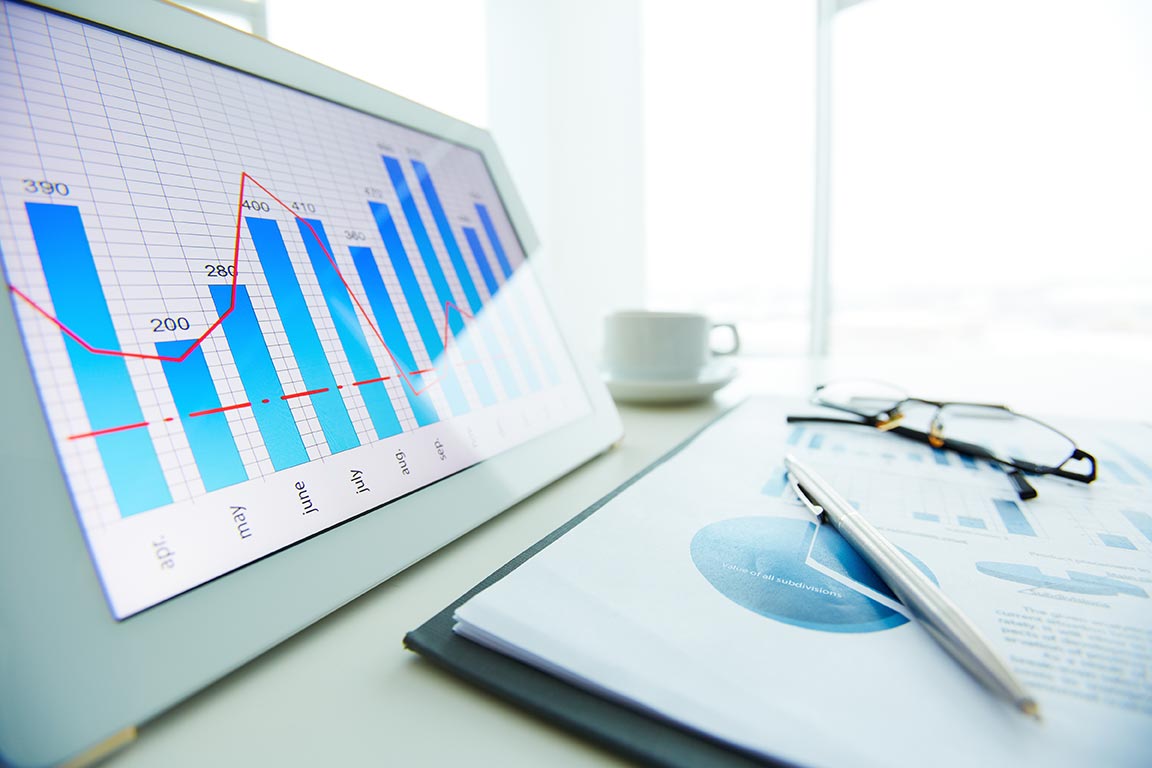
Economic indicators are used to measure the overall health of an economy. These indicators provide valuable information about the current state of the economy and can be used to predict future trends. In this article, we will explore the basics of economic indicators, their importance, and how they are used by policymakers, investors, and analysts.
What are economic indicators?
Economic indicators are statistics that provide information about the performance of an economy. These indicators can be used to measure various aspects of the economy, such as employment, inflation, gross domestic product (GDP), and consumer spending.
There are three main types of economic indicators: leading, lagging, and coincident. Leading indicators are used to predict future trends in the economy, lagging indicators provide information about past events, and coincident indicators provide information about current economic conditions.
Why are economic indicators important?
Economic indicators are important because they provide information about the overall health and performance of an economy, and they help decision-makers, including policymakers, businesses, and investors, make informed decisions. Here are some specific reasons why economic indicators are important:
- Monitor economic growth: Economic indicators such as GDP, industrial production, and retail sales help policymakers and businesses monitor economic growth, which is essential for planning and forecasting future economic trends.
- Track inflation and price stability: Inflation can have a significant impact on a country’s economy, and indicators such as the CPI and the inflation rate help policymakers keep track of inflation and price stability.
- Measure employment levels: Unemployment rate is a critical economic indicator because it helps policymakers understand the state of the labor market, which can affect consumer spending and overall economic growth.
- Assess market performance: Stock market indexes and other market indicators help investors and businesses assess the performance of financial markets and make investment decisions.
- Inform policy decisions: Economic indicators provide policymakers with critical information about the state of the economy, which can help them make informed decisions about monetary and fiscal policy.
Overall, economic indicators help provide a comprehensive picture of the economy, enabling policymakers, businesses, and investors to make informed decisions that can positively impact economic growth and stability.
How are economic indicators used?
The economy has three types of economic indicators: leading, trailing, and meeting. Leading indicators attempt to foretell what will happen next. Leading indicators include commodity futures and bond yield speculation. Information from the past is represented by lagging indicators. Joblessness figures or rate is a typical incidental result. Typically, coincident economic indicators are calculated simultaneously with the occurrence of the economic event. One classic illustration of coincident indicators is the personal income indicator.
The study of economics is concerned with understanding how economies work, including the factors that influence economic activity, such as government policies, market forces, and consumer behavior. It also involves analyzing the distribution of wealth and income within a society, and the impact of economic activity on factors such as employment, inflation, and economic growth.
There are different types of economies, including market economies, command economies, and mixed economies. In a market economy, the allocation of resources and the production of goods and services are largely determined by market forces, such as supply and demand. In a command economy, the government controls most aspects of economic activity. A mixed economy combines elements of both market and command economies.
Economic Output
One primary application of economic indicators is to assess a nation’s total economic output. The nation’s gross domestic product, or GDP, which is the sum of a nation’s productivity, is commonly used to define this output. Economists can use the GDP economic indicator to determine whether a nation is expanding or contracting economically. The strength or weakness of a nation’s growth in comparison to previous quarters or years can also be measured using economics.
Expansion
Financial experts likewise utilize monetary markers to quantify how much expansion in a country’s economy. In the past, inflation was defined as having too many dollars for too few goods. Consumer prices rise and difficult economic situations result from this phenomenon. Lagging indicators can tell if inflation has increased in the past and what countries should do to slow or stop future inflation. Additionally, leading indicators can predict how current economic conditions will drive up inflation in subsequent years.
Economists use benchmarks created by economic indicators to compare one nation’s economy to that of another. Economists can use this comparison to figure out why one nation is growing faster than another and what is driving that growth. Countries can also use economic indicators to assess their ability to import or export goods. Companies frequently take advantage of the opportunity to make money in emerging markets with strong economic growth.
Examples of economic indicators:
Economic indicators are statistics that measure the performance of an economy or a particular aspect of it. Here are some examples of economic indicators:
- Gross Domestic Product (GDP): This measures the total value of goods and services produced by a country over a certain period.
- Consumer Price Index (CPI): This measures changes in the prices of goods and services that consumers buy.
- Unemployment rate: This measures the percentage of the labor force that is unemployed and actively seeking employment.
- Inflation rate: This measures the rate at which prices of goods and services are increasing over time.
- Retail sales: This measures the total amount of sales made by retailers over a certain period.
- Housing starts: This measures the number of new residential construction projects that have started during a certain period.
- Stock market indexes: These measure the performance of stock markets and provide a gauge of investor confidence.
- Balance of trade: This measures the difference between a country’s imports and exports.
- Industrial production: This measures the output of the manufacturing, mining, and utility sectors of the economy.
- Consumer confidence index: This measures consumers’ level of confidence in the overall economy and their personal financial situation.
Facts
Economic indicators are statistical data that show an economy’s past or future trends. On the basis of financial data, various economic indicators can be calculated by government agencies, think tanks, and watchdog organizations. Economic indicators are typically regarded as authoritative by government agencies. People and organizations frequently utilize monetary markers to pursue monetary choices. These choices could be related to investing money, saving money, acquiring new assets, or making other significant choices.
Conclusion:
Economic indicators are an important tool for measuring the overall health of an economy. They provide valuable information about the performance of various sectors of the economy, such as employment, inflation, and consumer spending. These indicators are used by policymakers, investors, and analysts to make informed decisions about the economy. By understanding economic indicators and their significance, individuals and businesses can make better decisions about their financial strategies and investments.